
Boulder's $552 Million Budget Moves Forward


Hello Friends,
Last week, Boulder City Council took its first formal vote on the 2027 Recommended Budget, a $552.6 million spending plan that touches nearly every city service, from police and fire to parks, pools, transportation, housing and open space.
This year's budget is particularly challenging. The city is facing a projected $6.3 million General Fund shortfall, revenues are flattening, and labor, health insurance, utilities and other operating costs continue to rise. But balancing the numbers is only part of the conversation.
This budget also raises bigger questions about priorities, core services and how Boulder makes these decisions. And notably, some of the city's advisory boards, including the Parks & Recreation Advisory Board, where I serve, did not simply give their departmental budgets approval.
Lastly, election season is here, and later this week I'll be releasing the Jenny on the Record Voter Guide. My goal is to make a complicated ballot a little easier to understand. I will list who the candidates are, where they fall on some of the biggest issues facing Boulder, and importantly, how would they have voted.
I'll also break down some of the major ballot questions so you can see what you're actually being asked to vote on, and what it could mean for you. There is a lot on this year's ballot. Stay tuned.
Here we go.
The Record:
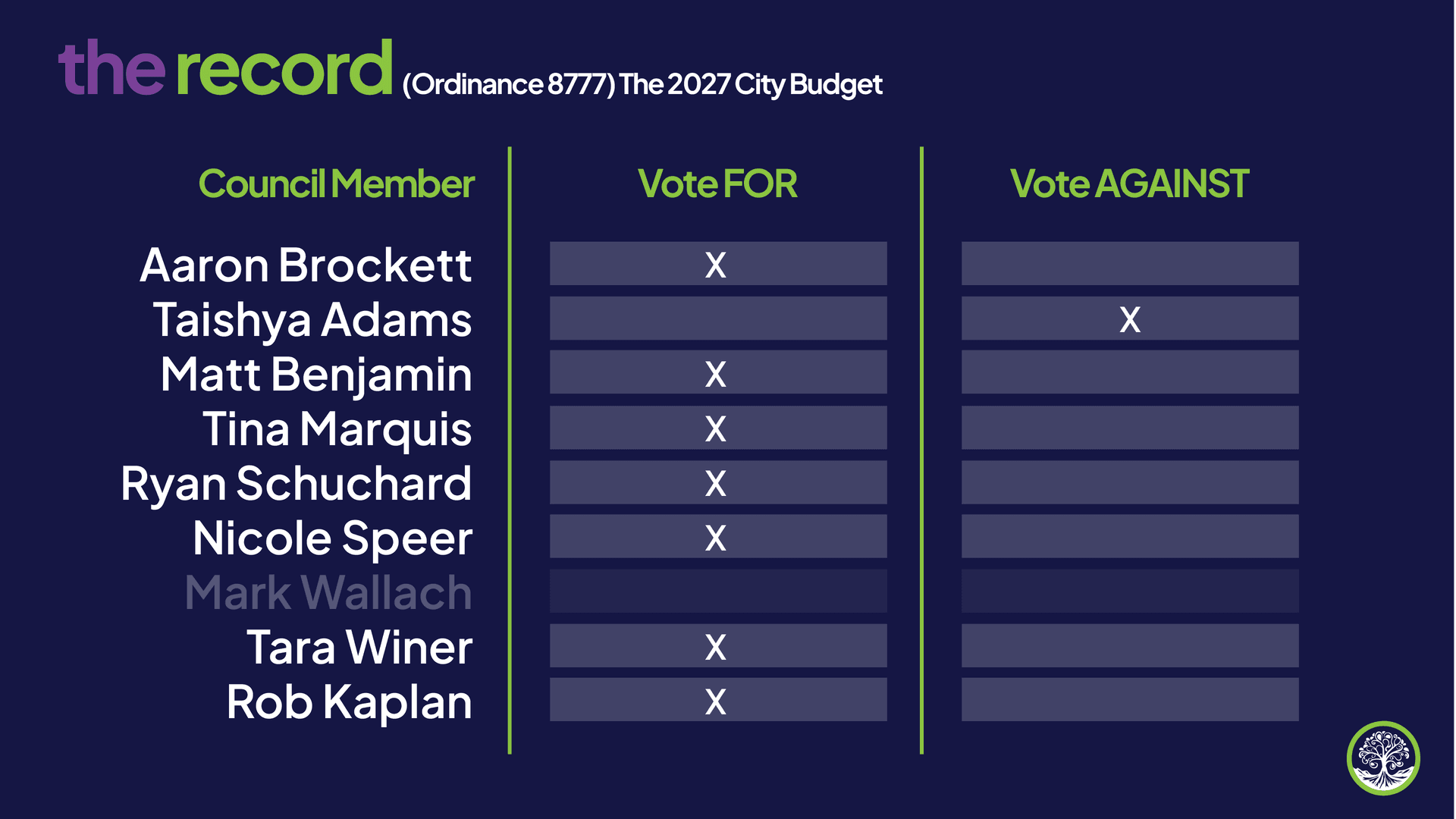
Public Hearing: Ordinance 8777: The 2027 City Budget
Date of vote: 10/1/2026
Outcome: Vote: 7–1
YES: Brockett, Benjamin, Kaplan, Marquis, Schuchard, Speer and Winer
NO: Adams
Category: Budget
Information: This is the main ordinance formally adopting the city's 2027 budget.
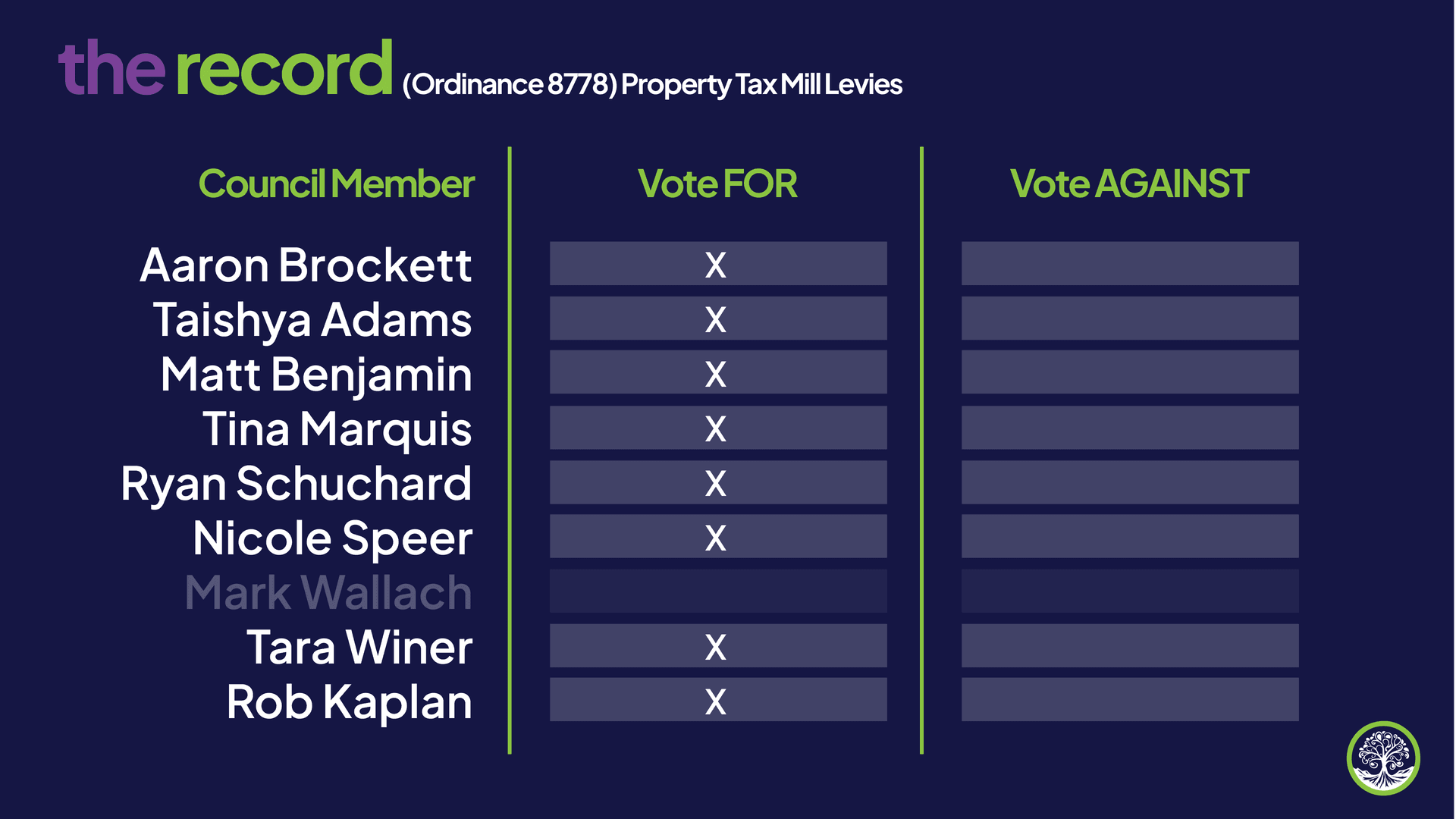
Public Hearing: Ordinance 8778: Property Tax Mill Levies
Date of vote: 10/1/2026
Outcome: Passed unanimously 8–0
Category: Budget
Information: This ordinance establishes the city's property-tax mill levy for taxes collected in 2027. The proposed total city levy is 11.648 mills, including general city operations, public safety, community housing and the permanent Parks & Recreation fund.
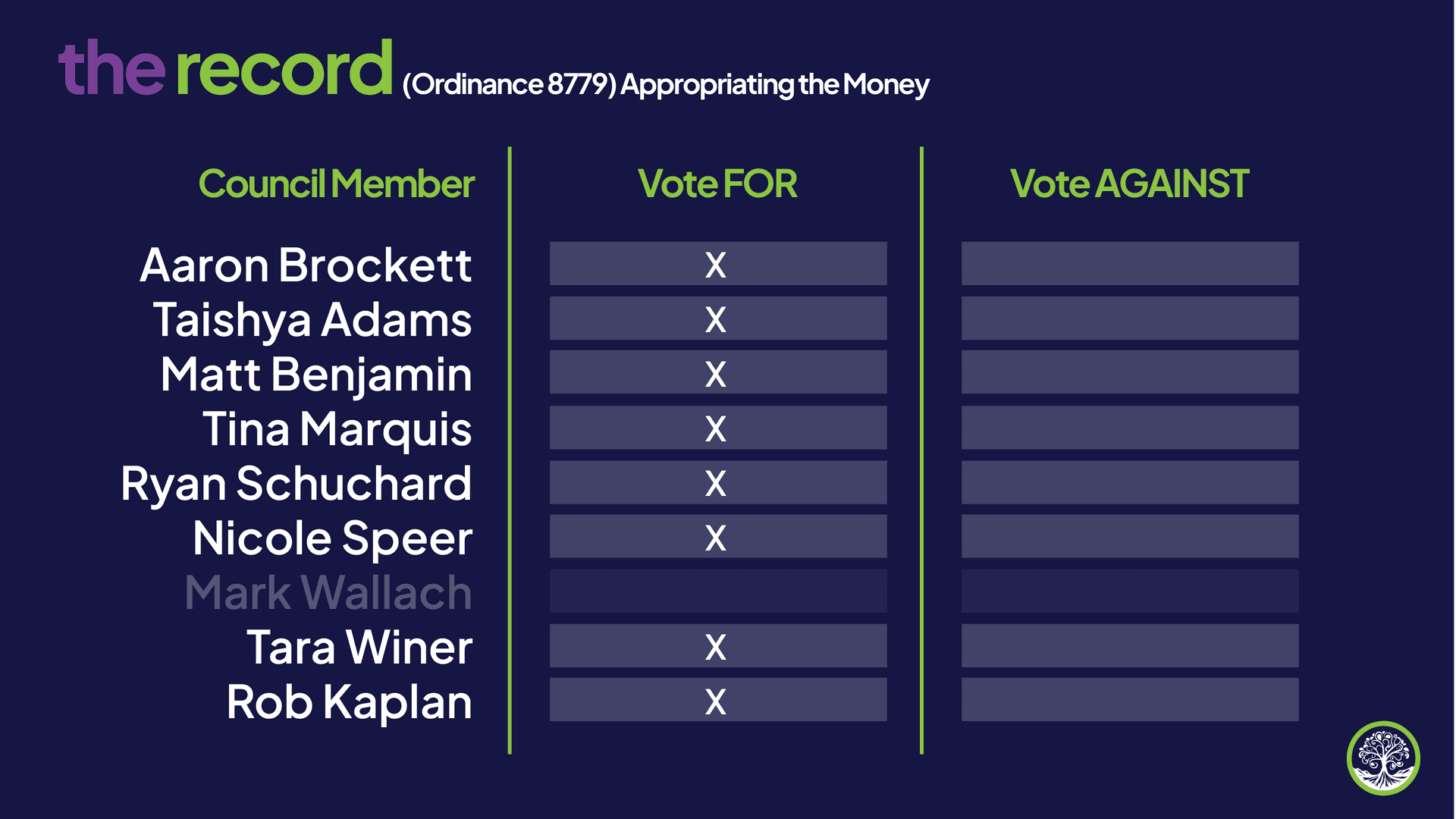
Public Hearing: Ordinance 8779: Appropriating the Money
Date of vote: 10/1/2026
Outcome: Passed unanimously 8–0
Category: Budget
Information: This is the companion ordinance that actually appropriates the money needed to pay the city's expenses and liabilities in 2027.
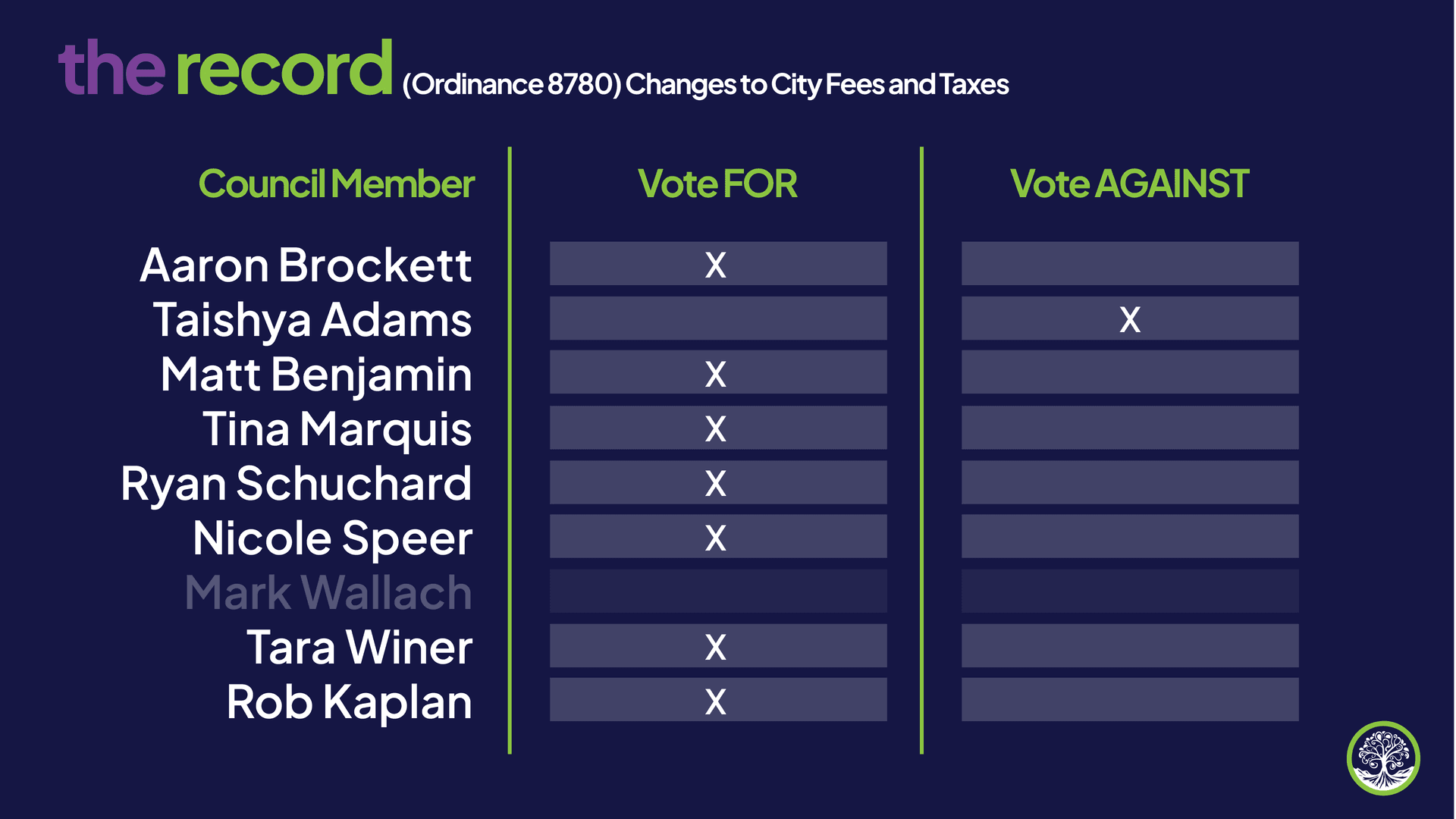
Public Hearing: Ordinance 8780: Changes to City Fees and Taxes
Date of vote: 10/1/2026
Outcome: Vote: 7–1
YES: Brockett, Benjamin, Kaplan, Marquis, Schuchard, Speer and Winer
NO: Adams
Category: Budget
Information: This ordinance makes a long list of changes to fees and taxes throughout the Boulder Revised Code, touching everything from government administration and licensing to health and sanitation, transportation, parking, parks and public spaces.
What Happened/Jenny’s Take
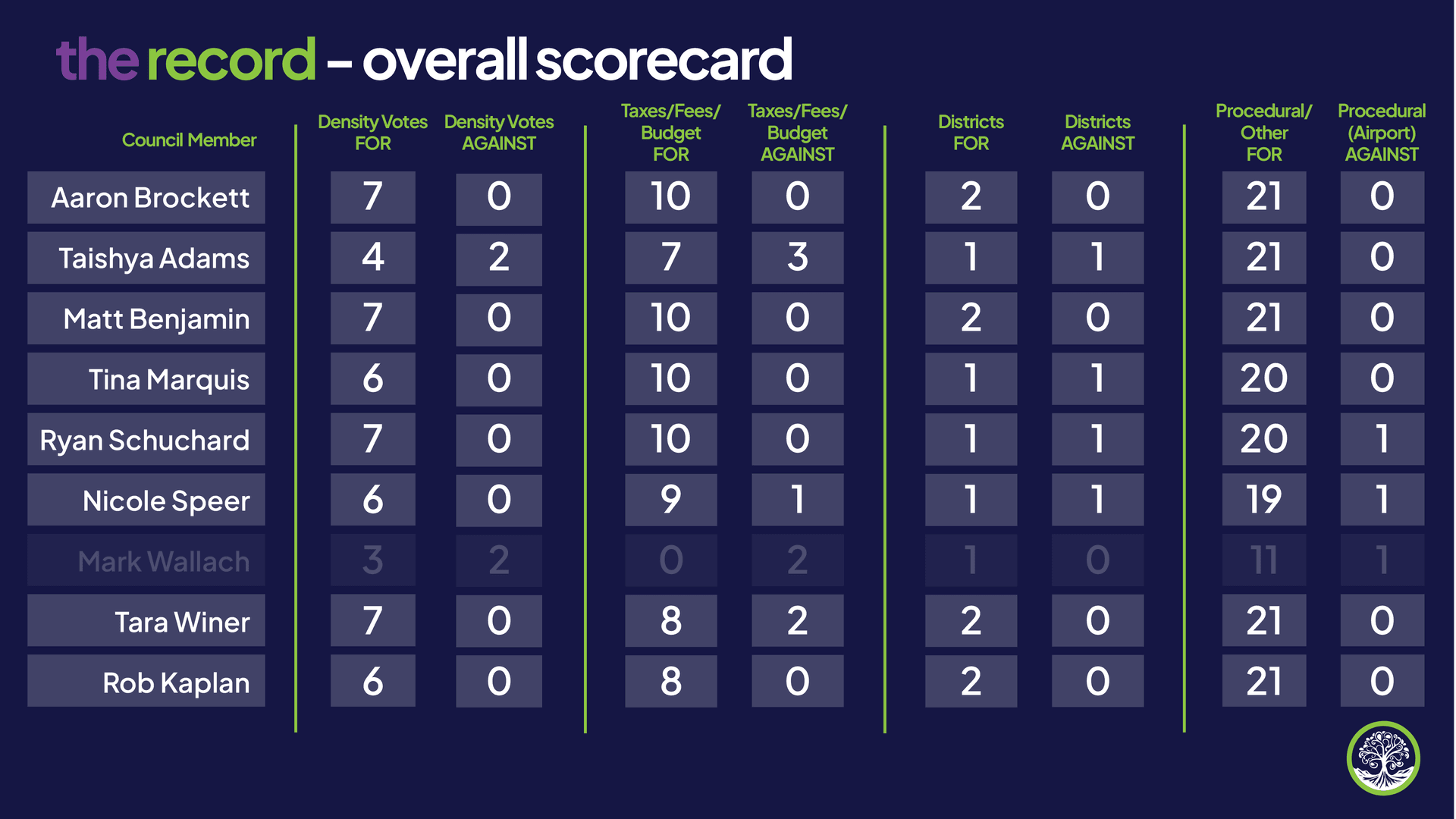
Council considered four ordinances necessary to move the 2027 budget forward. The primary budget ordinance passed 7–1, with Councilmember Adams voting no. The ordinance setting property-tax mill levies and the appropriation ordinance passed unanimously, while the ordinance making various fee and tax changes also passed 7–1, with Adams opposed.
This was the first reading. Final consideration and adoption are scheduled for October 15.
The overall proposed city budget is $552.6 million, including approximately $417.2 million for operations and $135.4 million for capital spending.
The General Fund, which pays for many of the services residents interact with most directly is approximately $200.5 million.
Parks Said No: This part is personal for me because I serve on the Parks & Recreation Advisory Board (PRAB). On September 28, PRAB voted 5–2 against recommending the proposed Parks & Recreation budget and I was one of those five votes.
It was not a vote against our Parks & Recreation staff. They were given the difficult job of finding reductions while wages, utilities, chemicals and other costs continue to increase.
My concern is where this trajectory is taking us.
The proposed budget includes reductions to recreation services, including fewer fitness offerings and the elimination of child care at East Boulder Community Center. The city is also changing subsidized recreation access for lower-income residents.
And then there is Spruce Pool. Spruce will remain open in 2027 because approximately $134,000 in one-time General Fund money was identified to operate it. But there is currently no ongoing funding identified beyond 2027. Staff estimates approximately $140,000 would be needed to operate the pool in 2028.
That means we're discussing the uncertain future of a longtime neighborhood amenity over roughly $140,000 in a city budget exceeding $550 million. I believe this warrants a much broader conversation about our priorities. Spruce has understandably received a lot of attention, but my concerns about the Parks budget go well beyond one swimming pool. We continue to face significant needs involving aging facilities and deferred maintenance while simultaneously continuing to approve capital budgets that include new infrastructure.
At some point we have to ask: How many times can we raise fees, reduce hours and eliminate programs before we fundamentally change what residents receive from their Parks & Recreation system? I don't believe the answer can simply be to continue trimming the services people actually use.
I would rather see us aggressively explore other options, partnerships, philanthropy, sponsorships, programming changes, revenue opportunities, upcoming capital projects and a broader examination of how city resources are allocated before we accept the loss of community amenities as inevitable.
PRAB's vote wasn't an isolated example of an advisory board questioning the budget. The Open Space Board of Trustees voted just 3–2 to recommend the proposed Open Space and Mountain Parks budget, with the dissenting members raising concerns about the use of Open Space tax revenue to pay for administrative services.
The board also raised the same broader concerns as PRAB about the city's budget-review process, including whether advisory boards were receiving enough time and information to meaningfully perform their oversight roles.
Our advisory boards exist, in part, to dig deeply into individual departments and subject areas in a way Council simply doesn't have time to do. When the people spending hours reviewing Parks, Recreation and Open Space budgets start raising concerns about priorities, transparency and the process itself, I think Council should pay attention, because the budget process is not working. Interestingly, this concern also surfaced during the Council meeting. Matt Benjamin described Boulder's budget process as "fully busted," arguing that October is simply too late to begin having meaningful conversations about major trade-offs.
I agree with the larger point. By the time a $552 million budget arrives for a formal vote, most of the difficult decisions have already been made. Council, advisory boards and the public should be having these conversations months earlier, when there is still a meaningful opportunity to influence priorities, not after departments have already determined which positions, programs and services will be reduced.
Boulder has a structural challenge that isn't going away. Costs are rising faster than some of our major revenue sources. We can continue responding by raising fees, eliminating positions, shortening hours and reducing services. But eventually, that strategy reaches its limit.
We also need to talk seriously about growing revenue. That means supporting economic vitality. It means creating a downtown where people want to spend time and money. It means making Boulder a place where businesses can open, invest and succeed. It means looking at permitting and regulations that add unnecessary costs. It means supporting tourism and strengthening our sales-tax base. Because we cannot cut our way to long-term financial stability.
I keep coming back to a pretty simple philosophy about local government: Take care of what we have. Maintain our parks and recreation facilities. Keep our pools operating. Maintain our streets and infrastructure. Fund public safety. Prepare for wildfire. Provide the basic services residents expect from their city. Then have an honest conversation about everything else.
That's the budget conversation I hope Boulder has going forward.
Thank you for reading!
Jenny
Founder, Jenny on the Record